Summary
Room dividers enhance privacy and functionality while maintaining natural light in open spaces. They serve as adaptable elements for defining distinct areas without the permanence of walls, balancing seclusion with brightness. The variety of available materials, from traditional wooden screens to modern acrylic, allows users to customize based on aesthetic preferences and practical needs, including eco-friendly options that support sustainability trends.
Importance of Room Dividers
Room dividers are essential for creating separate areas within popular open floor plans, making spaces feel organized and defined. They increase privacy while preserving an open atmosphere, particularly with materials like frosted glass that diffuse light effectively. In both residential and commercial settings, dividers support functionality by dividing larger areas into purposeful zones, facilitating better furniture arrangement and enhancing overall usability.
Popular Types of Room Dividers
Various stylish room dividers cater to needs for privacy while allowing light flow. Their unique materials and designs can be tailored to fit personal tastes and space requirements.
Wooden and Folding Screen Dividers
Wooden dividers provide sturdy options that mix privacy with aesthetics, with traditional folding screens and Shoji panels being popular for their design and functionality. Shoji screens, using wooden frames and translucent paper, diffuse light, offering both lightness and visual privacy suitable for contemporary interiors.
Fabric and Curtain Dividers
Curtains create a lightweight, flexible solution for privacy but may block more light than rigid panels. They are ideal for spaces that prioritize privacy and light control, especially in bedrooms and multipurpose areas.
Acrylic and Glass Dividers
Acrylic dividers are modern and minimal, allowing light while providing some privacy. Frosted or textured glass options create sleek aesthetics while diffusing light effectively without sacrificing brightness.
Bookcase and Shelving Dividers
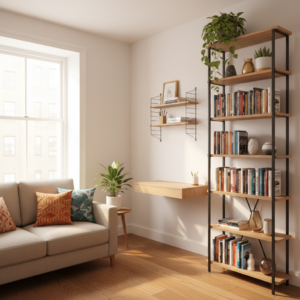
Using bookcases as dividers offers both storage and separation of spaces. While they allow light to filter through, adding drawers can help conceal clutter, maintaining visual appeal and functionality.
Bamboo and Eco-Friendly Dividers
Bamboo dividers are lightweight and sustainable, appealing to environmentally conscious consumers looking for stylish separation solutions.
Hanging and Decorative Dividers
Artistic hanging dividers, like those made from beads or glass, act as focal points in a room while maintaining a sense of openness and texture.
Metal Dividers
Metal dividers, available in materials like brass, copper, or aluminum, offer durability combined with elegance, each material presenting unique requirements for maintenance and aesthetic appeal.
Materials and Their Effects on Light and Privacy
Various materials used in room dividers significantly impact light transmission and privacy. For example, frosted glass allows substantial light while obscuring views, and woven shades offer gentle light filtering depending on weave density. Materials are not only chosen for their functional characteristics but also for aesthetic and environmental considerations, blending sustainability with style.
Frosted Glass
Frosted glass balances privacy and light, allowing a high degree of illumination while obscuring visibility. Its customizable properties make it a favored choice for many interior spaces, combining durability with aesthetic appeal.
Woven Shades and Natural Fibers
These materials efficiently filter sunlight, providing varying levels of privacy based on weave tightness. Adding privacy linings enhances their utility, allowing for optimal control over both light and seclusion.
Wood Plastic Composite and Other Wood-Based Materials
Wood polymer composites and traditional wood options offer decorative and durable solutions with varying light and privacy levels. Eco-friendly trends favor these materials as they combine aesthetic value with functionality.
Textiles and Layered Materials
Textiles in room dividers can create layered privacy qualities and light diffusion. Combining dense and porous materials can also contribute to reducing ambient noise within spaces.
Metal Dividers
Metal dividers are robust with varying design effects, allowing different levels of light flow while ensuring longevity and style. Their aesthetics suit a range of interior themes.
Design Trends and Aesthetic Styles
Modern room dividers are celebrated for their aesthetic value, shifting toward layered and warm designs that also act as sculptural elements. Eco-friendly slat panels and fabric options provide versatility and style, accommodating various architectural preferences.
Installation Methods and Their Impact on Functionality
The method of installation significantly influences the usability and aesthetic appeal of room dividers. Fixed installations lend stability and privacy, while hanging panel systems offer adaptability and ease of transition between open and segmented areas. These choices enhance not only functionality but also address sustainability by utilizing low-waste production processes.
Effects of Room Dividers on Ambiance and Spatial Flow
Room dividers shape both ambiance and spatial perception through defined boundaries, enhancing both physical layout and psychological comfort. They contribute visual interest and texture, affecting how individuals engage with their environment, while their adaptive nature allows for flexibility in usage without needing permanent changes.
Sustainable and Innovative Materials and Technologies
Sustainability in room divider design is increasingly important, with eco-friendly materials being incorporated to minimize environmental impact. Innovations such as adaptable dividers highlight the blend of style and functionality while supporting responsible manufacturing practices.
Balancing Privacy and Natural Light in Everyday Use
The design of room dividers often focuses on achieving privacy without sacrificing natural light. Options like frosted or transparent dividers allow light flow while providing visual separation, which is essential in both residential and commercial environments. Layered textile screens can also enhance privacy while softening light, effectively shaping the atmosphere of the space while modifying ambient noise levels.
Regional Adaptations and Innovations in Folding Screens and Shoji Panels
Folding screens have evolved from their historical roots in ancient China, adapting across cultures such as Japan and Vietnam. Modern variations embrace customization, allowing for seamless integration into contemporary styles, thereby expanding their application beyond traditional uses and reflecting current design preferences.
The content is provided by Blake Sterling, Home Upgrade News