Summary
Transform Your Garden: A Step-by-Step Guide to Installing a Drip Irrigation System provides gardeners and landscapers with actionable strategies for implementing efficient irrigation systems that conserve water and promote plant health. This guide explains how drip irrigation works—delivering water directly to roots through tubing and emitters—while emphasizing its advantages, such as significant water savings of up to 80%, healthy plant growth through proper moisture levels, and minimized evaporation and runoff. It covers the necessary planning steps, component selection, and installation procedures, along with troubleshooting tips to maintain system efficiency and sustainability.
Benefits of Drip Irrigation Systems
Drip irrigation systems excel in water conservation by delivering water directly to plant roots, significantly reducing waste from evaporation and runoff. This targeted approach can save up to 80% more water compared to traditional methods, leading to healthier plants with deeper roots and improved yields. Furthermore, these systems operate at lower pressures, resulting in decreased energy costs and a reduced carbon footprint, while also allowing efficient nutrient application directly to the roots.
Planning Your Drip Irrigation System
Effective planning is crucial for a successful drip irrigation system. Begin by assessing your garden layout, including the number of plants, their water requirements, and the topography to determine optimal water distribution. Categorize plants by their watering needs and consider future expansions to accommodate growth. Selecting the right components, such as emitters and tubing, and ensuring adequate water supply and pressure are vital to avoid ineffective irrigation. Planning facilitates a system that conserves water and provides tailored watering solutions.
Essential Components and Tools
A successful drip irrigation system relies on various components working seamlessly together. Mainline tubing directs water from the source to plants, while emitters regulate flow to individual plants. Filters prevent clogs, and pressure regulators maintain suitable pressure. Valves enable easy control over water flow, while fittings connect different system parts. Chemical injectors can integrate nutrients, enhancing plant health, while installation tools like punch tools aid in setting up the system.
Step-by-Step Installation Guide
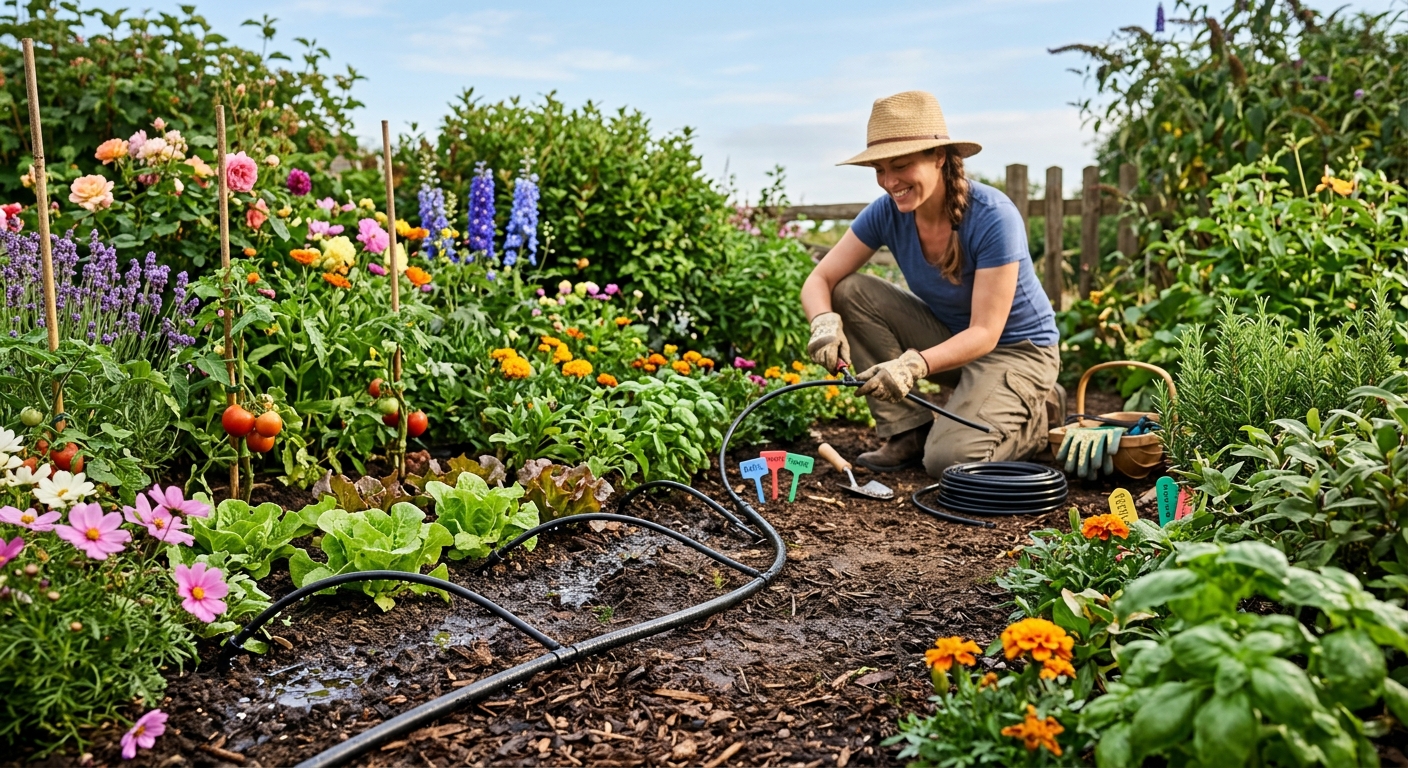
To install a drip irrigation system effectively, follow key steps. Start with mapping your garden to identify plant locations and their water needs, taking topography into account. Connect the system to a reliable water source, ensuring adequate pressure, and then lay out the mainline tubing and branches. Install emitters in the right locations and finalize the system with filters and end caps to maintain pressure. After installation, conduct a thorough system test to ensure proper operation.
Best Practices for Maximizing Water Efficiency
To enhance water efficiency, ensure proper component selection and pressure management. Regularly check pressure and install pressure regulators if needed. Quality filters are essential to prevent clogging, and routine system maintenance—including flushing and leak checks—will maintain optimal performance. Smart layout and scheduling can further optimize water usage, ensuring plants receive the right amount of moisture without overwatering.
Common Mistakes and How to Avoid Them
Be cautious of frequent mistakes when setting up drip irrigation systems. Inadequate emitters can lead to uneven watering, so thorough planning is essential. Choose the appropriate mainline tubing to avoid pressure issues, and install pressure regulators for consistent flow. Select suitable emitters based on garden dynamics, and prioritize filter installation to minimize clogging. Regular maintenance is essential to safeguard against breakdowns and keep the system functioning well.
Maintenance and Troubleshooting
Regular maintenance is key for a long-lasting drip irrigation system. Conduct visual inspections to catch signs of wear or leaks early, and maintain filters to prevent clogs. Flushing the system periodically removes debris, while monitoring pressure ensures effective water delivery. For common issues like rodent damage or clogging, timely repairs and inspections can prevent larger problems. Establishing a routine maintenance schedule enhances system reliability.
Environmental Impact and Sustainability
Drip irrigation systems are environmentally friendly as they conserve water and promote sustainable practices. By minimizing water loss and reducing energy consumption, these systems contribute to a smaller carbon footprint. They also help in preventing soil erosion and nutrient runoff, supporting healthier ecosystems. Regular maintenance is crucial for ongoing environmental benefits, ensuring long-term efficacy of the system.
Economic Considerations
Investing in drip irrigation yields economic benefits through significant water and time savings. Homeowners can potentially cut water usage by up to 75%, while reducing labor associated with watering and weeding by 90%. Although initial installation costs may vary, efficient design and regular maintenance can enhance productivity and profitability. Consulting an irrigation specialist can optimize system setup, aligning resource use with economic goals.
Additional Resources and References
For more insights into drip irrigation, Netafim’s Irrigation Products Department offers valuable resources and support. A guide is available, detailing installation tips and essential terms, particularly useful for DIY enthusiasts. Developing a comprehensive irrigation schedule alongside guidance from an irrigation specialist can help navigate design and management complexities, ensuring an efficient setup.
The content is provided by Blake Sterling, Home Upgrade News