After investing the time, money, and effort to create a comfortable home for yourself, the last thing you want is an attempt by burglars or intruders to enter your property with the wrong intent. It’s only natural to want to protect your property. After all, whether you rent or own your space, it holds your personal belongings, many of which are valuable or irreplaceable. A burglary can lead to financial loss, the disappearance of cherished possessions, and the unsettling feeling that your home is no longer a safe place.
So, how can you protect your home? The most obvious answer is to install a home security system. But this seemingly simple solution is a bit trickier because modern home security systems have evolved rapidly; they are much more advanced, and the diversity in options can make it overwhelming to make an informed decision.
Before investing in any home security system, it is important to consider which components are most valuable for your safety.
What Should a Complete Home Security System Include?
Burglars and intruders have gotten innovative, and they won’t always use windows and doors as their entry points. There are other entry points that they frequently use. Depending on the size and location of your home, you may require different tools to integrate into your home security system.
Below are the elements of a home security system (and you don’t need all of them) that work together to protect your property from intruders.
Control Panel
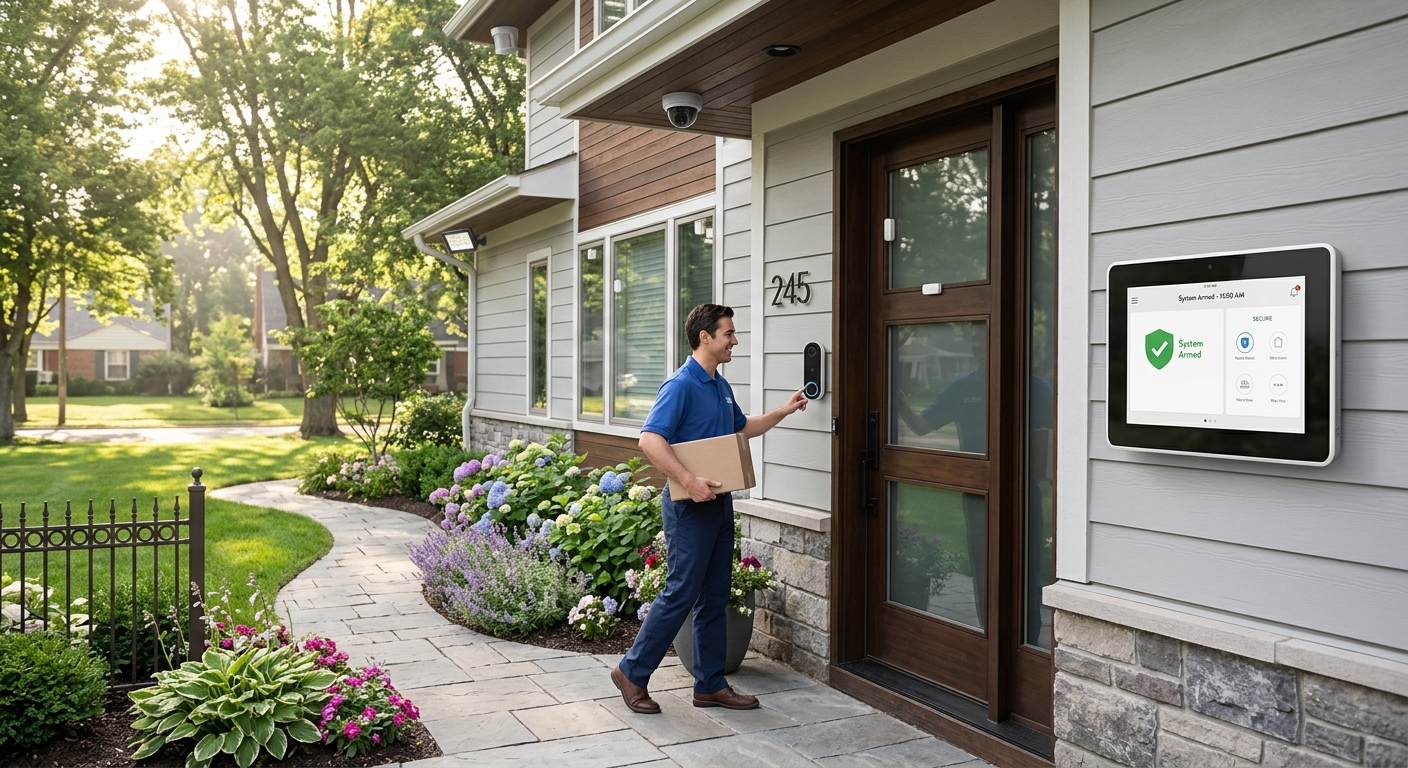
The control panel is the heart of any security system, as it connects different security devices. It helps communicate with door sensors, cameras, alarms, motion detectors, and smart locks. It also allows you to arm or disarm the system using a touchscreen, keypad, key fob, or mobile app. In cases where the system detects something unusual, it also sends an alert to your phone or to a professional monitoring center.
Door and Window Sensors
Doors and windows have always been the main entry points for unwanted guests, so before moving on to other spots, the first thing to do is make sure that they are secured. These sensors establish a magnetic connection with each other, and when someone tries to enter through these points while the system is armed, the magnetic connection breaks and triggers an alert as well as an alarm.
Motion Sensors
Entering through the doors and window has become quite common, so chances are your door and window sensors can be easily sidestepped. Prowlers might go on to climb the wall or enter through the garage. In such situations, motion sensors act as your second layer of defense by monitoring the activity inside your home. They use laser or infrared light to detect motion. When the beam of light is broken, they send an alert and sound an alarm. Some motion sensors can even differentiate between humans and animals.
Security Cameras
Security cameras may not physically prevent burglary or intrusion, but their mere presence is enough to protect the property. Generally, they do three important things: they allow you to monitor your property in real time; they record evidence in case of suspicious activity; and they can discourage some criminals from targeting your property in the first place because they’re aware that they might risk being recorded.
Video Doorbells
Your video doorbell eliminates the need for a traditional doorbell by doing so much at once. It allows you to communicate two-way with visitors, record visitors, and even send alerts to authorities if the panic button is pressed during an emergency.
Glass-Breakage Sensors
Some thieves aren’t sophisticated in their robberies; they might just aim to break a window, enter your property, and steal possessions. In such situations, glass-breakage sensors are the best option to protect your home. These sensors work by detecting when a window or glass breaks, after which they ring an alarm and send an alert to authorities.
Other Security Devices You Should Know About
The devices we’ve discussed so far are designed to protect your home from burglars and intruders. However, security isn’t only about preventing break-ins. Your home can also be threatened by hazards such as fires, gas leaks, flooding, or even unwanted wildlife. Fortunately, there are security devices that also help protect your home from these risks.
Floodlights automatically turn on when they detect movement. While the motion may be caused by a small animal, it isn’t always harmless. Sometimes, it could be a prowler or a large wild animal. By instantly illuminating the area, floodlights make it easier to see what’s outside and can also discourage unwanted visitors from approaching your property.
Similarly, environmental sensors help protect your home when the surrounding environment becomes a threat. They can detect hazards such as carbon monoxide leaks, smoke, and water leaks or flooding.
How to Choose the Right Home Security System in 2026
The number of security devices is limitless, but installing all of them on your property is not a smart move. After all, it is not easy to manage numerous devices, pay for their setup, and keep them operational. The smarter move is to assess your property and needs, and choose the right system based on those factors.
Below, we will discuss what factors to consider when choosing a security system for your home.
Start by Assessing Your Home’s Vulnerable Areas
Before you go ahead and install a generic security system, the first thing you should do is take a detailed walk around your property. This will help you identify which doors and windows are easiest to access. It’s also important to consider whether your home has a garage, basement, backyard, or side entrance.
Plus, consider whether you’re living in a large house or a small apartment. A larger home typically requires a more extensive security system that covers multiple entry points, whereas an apartment may require only a few well-placed smart security devices.
Choose a System That Fits Your Living Situation
If you’re renting a place, your security needs will likely be different from those of someone who owns a permanent residence. Renters often don’t stay in one place for long (sometimes they simply outgrow the place, and other times they have to move), which significantly affects their security needs. You probably won’t want to spend a large sum on a system only to remove it later.
Wireless security systems are usually the better choice in such scenarios since they’re easy to install, relocate, and reinstall in a new home. Hardwired systems, on the other hand, are often a better investment for homeowners who plan to stay in the same property for years.
Decide How You Want Your Home Monitored
You have the option to either self-monitor your system or let a professional take care of it for you. When you self-monitor, updates will come directly to your phone, and you can choose to respond to or ignore the alerts. This is usually cheaper than professional monitoring.
Professional monitoring is usually the best option for frequent travelers. In this case, a monitoring center will take care of your home by responding to alerts and contacting emergency services if needed. This usually comes with a monthly subscription fee.
Pay Attention to Camera Quality
A simple camera is sufficient for peace of mind, but it may not be effective enough to protect your property. Sometimes prowlers bypass every security system and steal your valuables. The only way to recover your belongings then is to identify who the intruder was and what he looked like, and here, a good-quality camera makes a huge difference.
Look for a camera packed with important features, such as night vision, which lets you capture clear pictures even in low light. Similarly, motion sensors allow the camera to only record suspicious activity rather than run continuously. The high resolution will help identify the suspect, and a different viewing angle will ensure that your property is protected from key directions.
Make Sure the System Is Reliable
It’s easy to install a security system once, but what really matters is how reliable it is when you need it the most. If the system stops working after a few days or fails to operate during a crucial moment, it defeats the very purpose of having one. Before making a purchase, check whether it comes with a battery backup that keeps it running during a power outage.
It is also worth choosing a system with cellular backup, so it stays connected even if your Wi-Fi goes down. A reliable mobile app and regular software updates are equally important, as they help ensure the system continues to perform properly over time.
Check Whether It Works With Your Smart Home
Nowadays, most households use smart home devices such as smart locks, smart lights, and voice assistants. The security system should be compatible with these devices. This integration will help your devices work together rather than being controlled by separate apps.
Consider the Storage of Your System
It is also important to consider how you want your data to be controlled. You can have complete control over your data if you choose to save it to local storage, such as a memory card or a network video recorder (NVR). This is relatively cheaper, but it comes with one major drawback: you will lose your recording if the camera or the recording is damaged or stolen.
Many people opt for cloud storage, which keeps their data secure on remote servers and lets them access it anytime, anywhere using their phone or computer. With this storage, even if your camera is stolen or damaged, your data will remain secure, but you will have to pay a monthly or annual subscription fee to keep the system running.
Think About Privacy
Your system monitors everything that happens in and around your home, so you definitely don’t want a security system that mishandles your data. Your privacy is important. To keep your data protected, look for a system that offers features such as end-to-end encryption and two-factor authentication to prevent unauthorized access.
It is equally important to read the privacy policy of the company you are purchasing your security system from. This will provide you with insight into how they handle your data and whether it is shared with third parties.
Compare the Cost of the System
Cost is one thing you should never ignore. You might come across a company that offers free installation or doesn’t charge much upfront, but makes up for it with expensive monthly subscription fees. Others may charge more for the equipment and installation, but have little to no ongoing costs. Therefore, cost comparison is important before you commit to a system.
Choose a System That Can Grow With You
Finally, security needs don’t stay the same; what works today might become obsolete in a few years. You might move into a bigger house, renovate your current home, or simply decide to add more protection over time. None of this means you have to spend money replacing your entire security system whenever your needs change. Instead, choose a system that can grow with you.
You should be able to add more devices as your needs evolve. For example, you may start with a few security cameras. Still, later you should be able to integrate smart lights, motion sensors, smart locks, or a video doorbell without having to replace your existing system.