Summary
Transform Your Space: 3 Inspiring Summer Beach House Design Ideas for Your Next Remodel outlines key approaches for beach house renovations that marry style, practicality, and sustainability. With coastal environments posing unique challenges such as salt air and humidity, material selection is crucial for durability while maintaining aesthetic appeal. This article showcases three design themes—Coastal Minimalism, Nautical Charm, and Tropical Oasis—that facilitate the creation of resilient and inviting summer retreats, encouraging exploration of modern eco-friendly practices and architectural strategies.
Design Concept Overview
Designing a summer beach house entails a focus on lifestyle needs alongside local climate considerations. Key elements like open floor plans and natural light foster a seamless indoor-outdoor connection, making it essential to choose materials that can withstand coastal conditions while enhancing resale appeal. Incorporating features like raised foundations not only improves flood protection but also promotes airflow, effectively addressing practical and aesthetic desires.
Interior design also centers on relaxation, using light colors and natural textures to create a welcoming ambiance. Color schemes often draw from nature, integrating shades like sandy beige and seafoam green to exude a tranquil feel. The attention to sustainability is evident through the selection of energy-efficient systems and durable materials that complement the coastal environment.
Coastal Minimalism
Coastal Minimalism emphasizes simplicity and functionality, appealing to homeowners seeking a serene retreat. This style often prioritizes large windows and open layouts to enhance natural light and ocean views. Materials that are resistant to coastal elements are preferred for their durability, allowing for minimal maintenance while retaining a modern aesthetic.
Architectural Features and Materials
Key architectural features include large windows, open floor plans, and elevated structures that respect the minimalist philosophy while providing practical flood protection. Selecting materials like fiberglass and treated sustainable wood ensures aesthetics are balanced with longevity, completing a cohesive coastal design.
Color Palette and Interior Elements
Color choices in Coastal Minimalism lean towards softer, nature-inspired tones that foster a calming ambiance. Textures from weathered surfaces and natural materials contribute to a relaxed atmosphere, enhancing the overall minimalist design.
Lighting and Furnishings
Lighting choices reflect natural elements, often featuring organic shapes and materials to maintain a cohesive coastal aesthetic. Furniture prioritizes comfort, melding durability with the minimalist ethos that characterizes this design approach.
Nautical Charm
Nautical Charm injects a vibrant coastal atmosphere into beach houses through distinctive maritime accents. Key design elements celebrate seafaring traditions while maintaining a casual and inviting aesthetic. Textural layers of natural materials and bright color combinations enhance the playful theme of this style.
Tropical Oasis
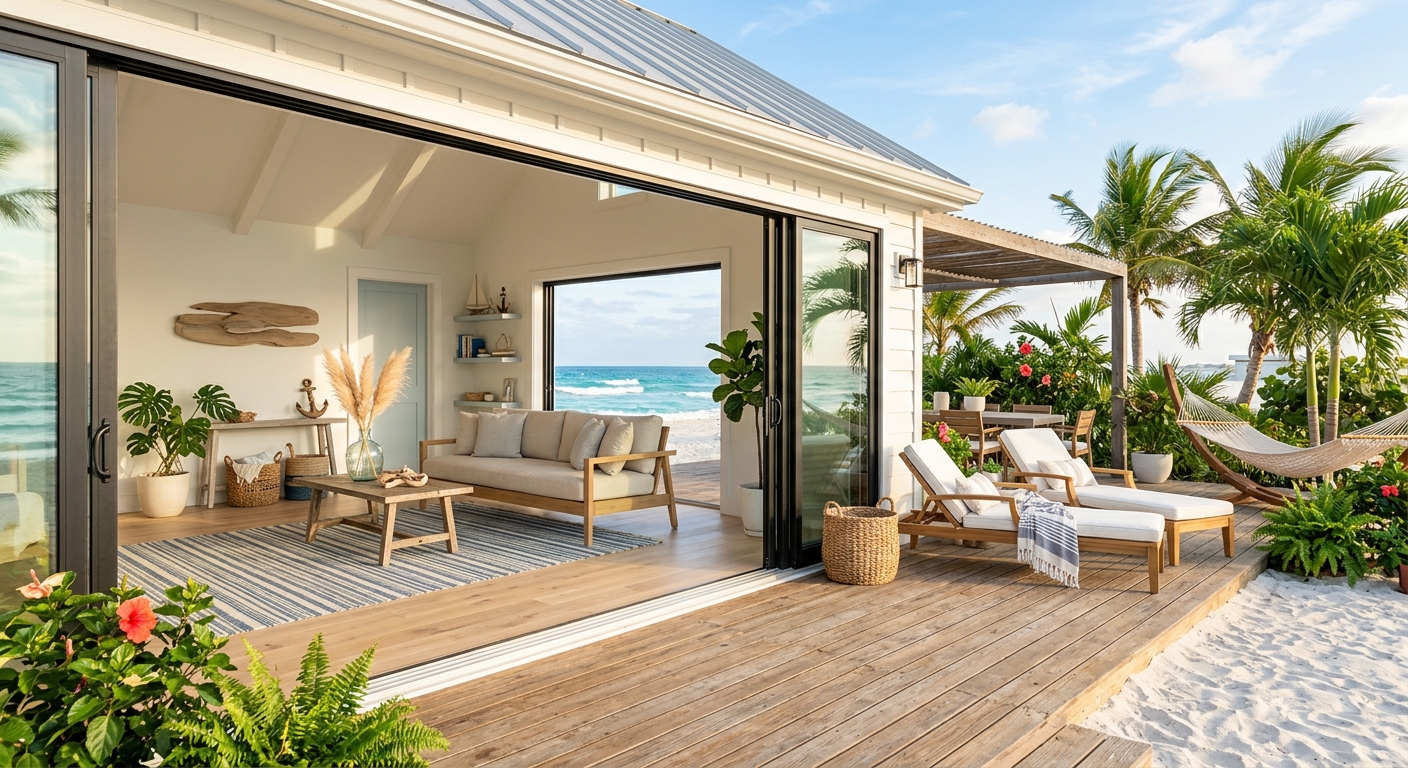
A Tropical Oasis design invites warmth and a vibrant connection to nature. Integrating lush greenery, bold colors, and open layouts creates a resort-like ambiance. The focus on indoor-outdoor living serves to enhance relaxation and comfort, making it ideal for a permanent summer feel.
Architectural Styles and Features
Understanding various architectural styles helps homeowners determine the best fit for their vision and practical needs. American Coastal styles prioritize natural themes and open living, while modern designs combine sustainability with sleek aesthetics. Colonial and Mediterranean styles offer timeless elegance, typically featuring elements that harmonize indoor and outdoor spaces.
Practical architectural features—such as durable stone walls and sustainable materials—address coastal environmental challenges effectively, ensuring long-term resilience. Each style integrates specific attributes that appeal to different preferences while enhancing functionality.
Materials and Finishes in Popular Design Themes
Current trends highlight a mix of traditional and modern building materials that strike a balance between aesthetic appeal and sustainability. Designers favor nuanced color palettes that incorporate warm tones alongside natural finishes to create inviting interiors. Increasing demand for weather-resistant materials, such as treated wood and non-cellular PVC, aligns with the dual goals of durability and environmental stewardship.
Eco-Friendly Building Materials for Coastal Remodels
Choosing the right materials is crucial for coastal remodeling to endure extreme conditions. Concrete and fiberglass emerge as robust favorites that resist degradation, while sustainable woods provide aesthetic warmth when treated correctly. Opting for locally sourced materials not only enhances appeal but also minimizes environmental impact, fostering a holistic approach to coastal homebuilding.
Energy-Efficient Design Strategies and Technologies
Integrating energy-efficient strategies in beach house designs can significantly reduce energy consumption while enhancing comfort. Solar panels and cross-ventilation methods improve indoor climate control, minimizing reliance on traditional cooling systems. Energy-efficient appliances and smart lighting contribute further to these sustainability goals.
Sustainable Water Management and Conservation
With the rising demand for water, effective management strategies become increasingly critical in coastal settings. Implementing native landscaping can conserve water and stabilize soil, while rainwater harvesting and greywater recycling enhance sustainability. These efforts contribute to a broader approach that balances comfort with environmental responsibility.
Remodeling Considerations
When remodeling a beach house, selecting materials suited for the coastal climate is paramount. Incorporating local knowledge helps adapt designs to specific environmental conditions, ensuring compliance with building codes and enhancing durability. Considering eco-friendly materials can yield both aesthetic benefits and a reduction in maintenance requirements, facilitating the creation of a sustainable coastal retreat.
Maintenance Tips for Beach Houses
Maintaining a beach house involves addressing environmental challenges, especially in protecting exteriors from corrosion. Selecting durable, rust-resistant materials and high-quality paints can prolong the life of your home’s finish. Elevating homes and implementing native landscaping not only assists with maintenance but also fosters sustainability and resilience against coastal elements.