Winters are known for bringing hefty energy bills with them. On the one hand, you want your home to stay warm and cozy, but on the other, the thought of the heating bill arriving at the end of the month can send shivers down your spine (no pun intended!).
This sounds like a double-edged sword until you realize there are alternative ways to keep your house warm and cool without paying hefty bills. One that people are increasingly using is a heat pump.
A heat pump does not consume fuel to heat your interiors; instead, it just moves heat. No matter how cold it gets outside in winter, there is still heat in the atmosphere, and the heat pumps move that heat indoors to warm your home. Similarly, in the summer, it removes heat from your indoor space.
Comparison of Different Heat Pumps
There are two main types of heat pumps. They work in a similar way, with the only difference being where they get their heat.
Air-Source Heat Pumps
Most people use air-sourced heat pumps, and their function is pretty straightforward: in winter, they take heat from the outdoors to warm your home, and in summer, the process is reversed, with heat moving outside.
These heat pumps can be either ducted or ductless (also called mini-split). In the former case, your heat pump does not require an extra pathway to move air in your home. It can use the existing ducts (often connected to your furnace or central air conditioner) to move heated or cooled air throughout your home. Instead of the furnace heating the system or the central air conditioner doing the work, your heat pump handles it.
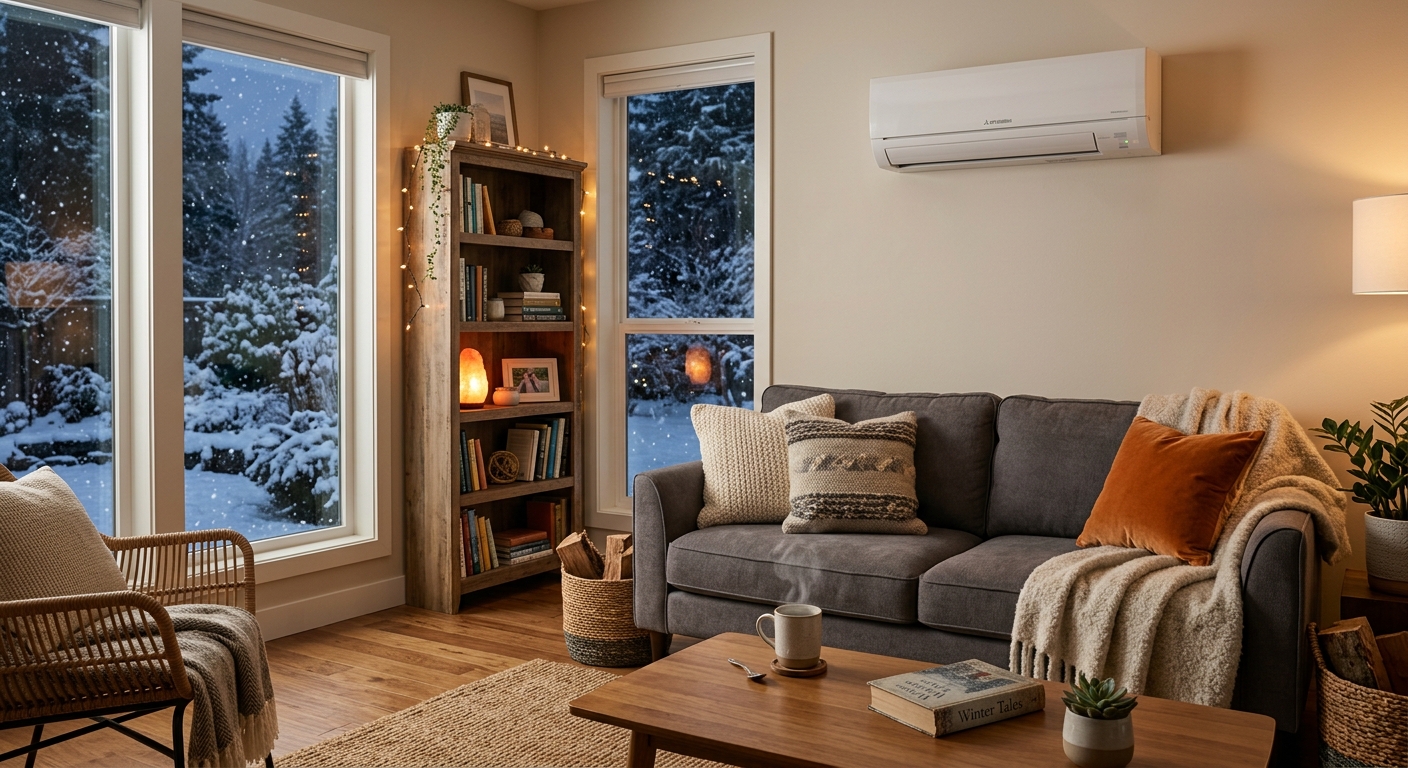
Your ductless heat pump, on the other hand, blows air directly into the room where the indoor unit is installed. It does not rely on existing channels. It consists of two main units: one outdoor unit and one or more indoor units (depending on your needs) mounted high on the walls. These units are connected with small electrical wires and pipes that pass through a small hole in the wall.
People often choose air-source heat pumps for their lower installation costs. Additionally, they are easier and quicker to install because you don’t need underground excavation. However, they might not be very efficient, as their performance varies with outdoor temperature. This may cause them to work harder, or you might have to rely on other heating sources.
Ground-Source (Geothermal) Heat Pumps
A geothermal heat pump’s function is the same as that of an air-source heat pump, with the sole exception that, instead of taking heat from the air, it draws it from the ground. The temperature usually stays constant a few feet below the surface throughout the year. To extract this heat, pipes are installed underground, and a liquid circulates through them to absorb the underground heat. The heat pump then transfers the heat into the home.
These are known for being among the most energy-efficient heating and cooling systems available. This means they can deliver greater energy savings because you don’t need to rely on other heating sources to maintain your indoor temperature. Since most of the system is underground, it offers two additional advantages: the underground components are less likely to break down, and the system operates more quietly.
However, the installation costs can be much higher than those of air-source heat pumps. Additionally, installing the entire system takes more time. It may also not be possible to install it on every property, especially homes with limited yard space or ground that is difficult to dig.
How Heat Pumps Can Reduce Home Energy Costs
When your heating system stops relying on propane or kerosene, your energy costs automatically reduce. However, your savings can vary depending on your energy needs, your system’s efficiency, and any other renewable energy source (such as solar) you combine with your heat pumps.
Below, we discuss in detail how you can realistically reduce your home energy costs.
Heat Pumps Consume Less Energy To Heat Your Home
If you had to choose between creating something from scratch that costs more or simply moving something that already exists, you would have no trouble choosing the latter, and that is the logic behind heat pumps. It simply moves the air, so your energy costs are reduced from the beginning.
It Lowers Your Energy Bills
Once you install heating pumps, you’re not paying for your traditional heating system, which may use kerosene or gas. Your monthly electricity bill might go up, but since you will not be using other energy sources, the total amount will significantly reduce. It is also worth mentioning that heat pumps consume far less electricity to produce heat. For example, a heat pump can produce 3-4 kWh of heat by consuming 1 kWh of electricity.
One System Works for Different Seasons
Without heat pumps, you generally need separate systems for summer and winter. In winter, you must prepare your furnace by repairing it, and in worst cases, you end up replacing the entire system. This process is not only overwhelming but also entails significant maintenance and equipment costs.
Similarly, in summer, the same process is repeated with air conditioners. But when using a heat pump, you are using two systems (for both heating and cooling) in one. This directly reduces the cost of maintaining your temperature control system.
Heat Pumps (Ductless) Let You Heat Individual Rooms
Ductless (mini-split) heat pumps don’t need ducts to heat a room. The system consists of an outdoor unit connected to one or more indoor units. This gives you greater control over how you heat your home. For example, you can use the heat pump to warm just your living room instead of the entire house. This can also contribute to energy savings.
They Reduce Electricity Cost By Working with Solar
Many homes have adopted solar technology, which has allowed homeowners not only to generate electricity for their households but also to sell excess electricity for tax credits or cash. When you’re already using solar panels, a heat pump can use the electricity they generate to heat your home. As a result, you may significantly reduce—or even eliminate—the electricity costs associated with heating your home.
How to Maximize Energy Saving with Heat Pumps
Heat pumps are already effective at reducing electricity costs, but they can be made even more efficient by addressing a few key factors. If your home’s walls are poorly insulated or your window seals are broken, your heat pump will have to work harder to heat the indoors. By fixing these issues, you can improve your system’s efficiency.
Heat pumps also work harder when the air filters are dirty, as dirty filters restrict airflow. By regularly cleaning and maintaining the filters, you can keep the system running efficiently, reduce electricity consumption, and maintain the same level of comfort.
It is also important to choose a system that is suitable for your home. A small heat pump installed in a large home will have to work continuously and consume more electricity. Similarly, an oversized heat pump in a small home may cycle on and off too frequently, which can reduce its efficiency and increase wear on the system.