Summary
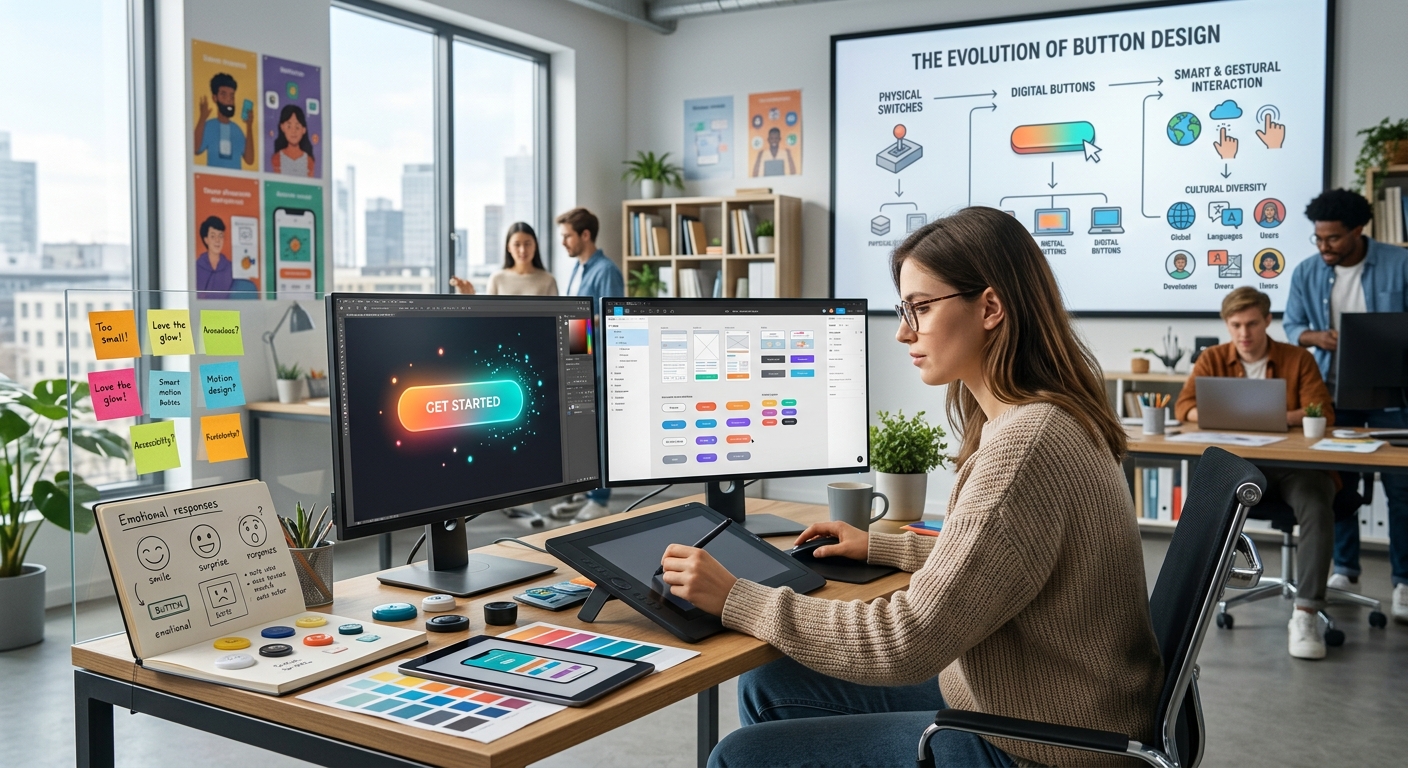
Mastering the Art of Button Pushing examines both the literal and metaphorical implications of “button pushing.” Initially, it referred to the physical act of pressing buttons, but it has evolved to describe behaviors that provoke specific emotional responses in others. This exploration intersects user interface (UI) design, where effective button design enhances user interaction by incorporating visual feedback and animations to guide behavior and build trust. As technology advances, new innovations like capacitive and smart buttons improve user experiences, catering to our evolving digital landscape while addressing usability across cultural contexts.
Definition and Scope
“Button pushing” signifies both literal actions, like pressing controls, and metaphorical behaviors that provoke reactions. This dual meaning emphasizes how specific stimuli can elicit distinct responses in humans, akin to mechanical buttons. In UI design, animations serve as subconscious cues, helping to manage cognitive load and refining user interactions. Mastering button pushing involves grasping the subtleties of both technological designs and interpersonal communications to enhance overall effectiveness.
Literal and Metaphorical Meanings
<p"The phrase 'pushing someone's buttons' stems from the straightforward cause-and-effect of pressing a mechanical button. It symbolizes specific triggers that evoke emotional or behavioral reactions in others. Understanding this metaphor provides insight into how targeted communication can influence interactions across cultures, as both machines and people respond to deliberate stimuli.
Historical Background
The term “button” originates from the French word bouton, and its conceptual usage has evolved significantly with advancements in technology. Initially linked to decorative clothing, the application of push buttons expanded between 1880 and 1920 with the introduction of electric buttons on household items, paving the way for the idiomatic use of “pushing someone’s buttons” to indicate triggering responses, similar to operating machines.
Cultural and Linguistic Equivalents
<p"The idiom 'pushing someone's buttons' varies across cultures, yet communicates the same concept of provoking emotional reactions. While its phrasing may differ, the underlying idea of sensitive topics eliciting responses universally resonates. Understanding these equivalents aids in effective cross-cultural communication and helps avoid potential misunderstandings, underscoring the importance of contextual awareness in interpersonal dynamics.
Button Implementation in User Interfaces
Buttons are key elements in user interfaces, guiding user interactions effectively. In graphical user interfaces (GUIs), they prompt specific actions associated with various functions. Managing different interaction states ensures users receive visual feedback, enhancing clarity whether through hover, active, or loading states. Effective button design incorporates color, shape, and animations to communicate interactivity and maintain user engagement while fostering a seamless experience.
Event Handling Mechanisms
Event handling is fundamental in interactive applications, enabling programs to respond to user actions such as clicks. Various programming frameworks employ distinct event handling methods, such as Windows Forms relying on Click events, JavaScript utilizing addEventListener for button interactions, and Qt’s signal-slot mechanism providing intuitive event handling linked to UI components. These mechanisms allow for responsive actions, enhancing user interaction effectively.
Visual Feedback and State Management
Visual feedback in user interfaces confirms user actions, essential for smooth navigation during interactions. Effective state management employs visual cues through CSS to signify button states, with careful consideration for desktop versus mobile use. Ensuring clarity in interactive feedback helps reduce confusion, facilitating a more intuitive user experience by appropriately signaling button statuses such as enabled or pressed.
Cognitive Processes in Button Interaction
Button interactions engage psychological processes of perception and cognition, reflecting how users interpret and respond to UI elements. Effective button design leverages affordances that visually communicate clickability, aligning with cognitive visual processing patterns. These interactions minimize hesitation, enhancing user trust while optimizing clarity through design features that guide attention and engagement.
Ergonomics and Physical Design of Buttons
The ergonomic design of buttons influences user comfort and interaction efficiency. Optimal positioning, visual feedback, and tactile design contribute to intuitive usage, supporting usability beyond mere aesthetics. Aligning button designs with ergonomic research ensures comfort during prolonged interactions while establishing trust through clear, user-friendly designs that enhance overall experience.
Usability Testing for Button Design
Usability testing is crucial in button design, validating that interactions meet user needs and expectations. Users engage with buttons to confirm ease of task completion, highlighting critical functionality rather than aesthetic preferences. Through careful testing, designers can identify usability issues and optimize button interactions for frictionless user experiences.
Impact of Animations and Transitions
Animations enhance user interfaces by providing immediate feedback on user actions, improving overall interaction quality. They serve as crucial communicators for user actions, supporting clarity in navigation and cognitive engagement. However, careful design ensures these animations don’t overwhelm users or introduce cognitive load, maintaining a balance between aesthetics and usability throughout interactions.
Applications and Domains
Button pushing has diverse applications across fields, emphasizing effective design and usability. In web and interface design, buttons facilitate critical interactions, while in gaming, their ergonomic design is vital for comfort and performance. The metaphor extends into interpersonal skills, highlighting the importance of managing emotional dynamics in team contexts. Color psychology also plays a role, with designers leveraging emotional responses to create resonate interactions.
Technological Innovations and Adaptive Designs
Button technology is advancing toward low-power, smart designs that enhance user interaction. Capacitive touch switches and smart buttons are integrating into the Internet of Things (IoT), providing seamless user control while prioritizing intuitive design. Adaptive UI systems leverage user data to tailor experiences dynamically, improving engagement by adjusting interactions based on user behavior.
Criticisms and Controversies
The idiomatic use of “button pushing” faced criticism for potential misuse and cultural misunderstandings. In UI design, vague interactivity cues can hinder usability, emphasizing the need for clear affordances. Furthermore, complex animations may introduce performance challenges, necessitating a balance between engaging design and efficient user interface interactions.
Future Trends and Prospects
Emerging trends in button technology emphasize sustainability and user adaptability. Smart push buttons empower enhanced user interaction through IoT integration, ensuring responsive design evolves with user needs. The focus on user-friendly interfaces reflects a shift toward personalizing interactions, supporting the ongoing development of technology that is both efficient and approachable.
The content is provided by Sierra Knightley, Home Upgrade News